Loading...
Serving West Melbourne, FL and surrounding areas. (321) 294-0260
Cedar brings warmth and character to any backyard - and its natural oils hold up in Florida's humid climate better than most woods without the cost of composite materials.
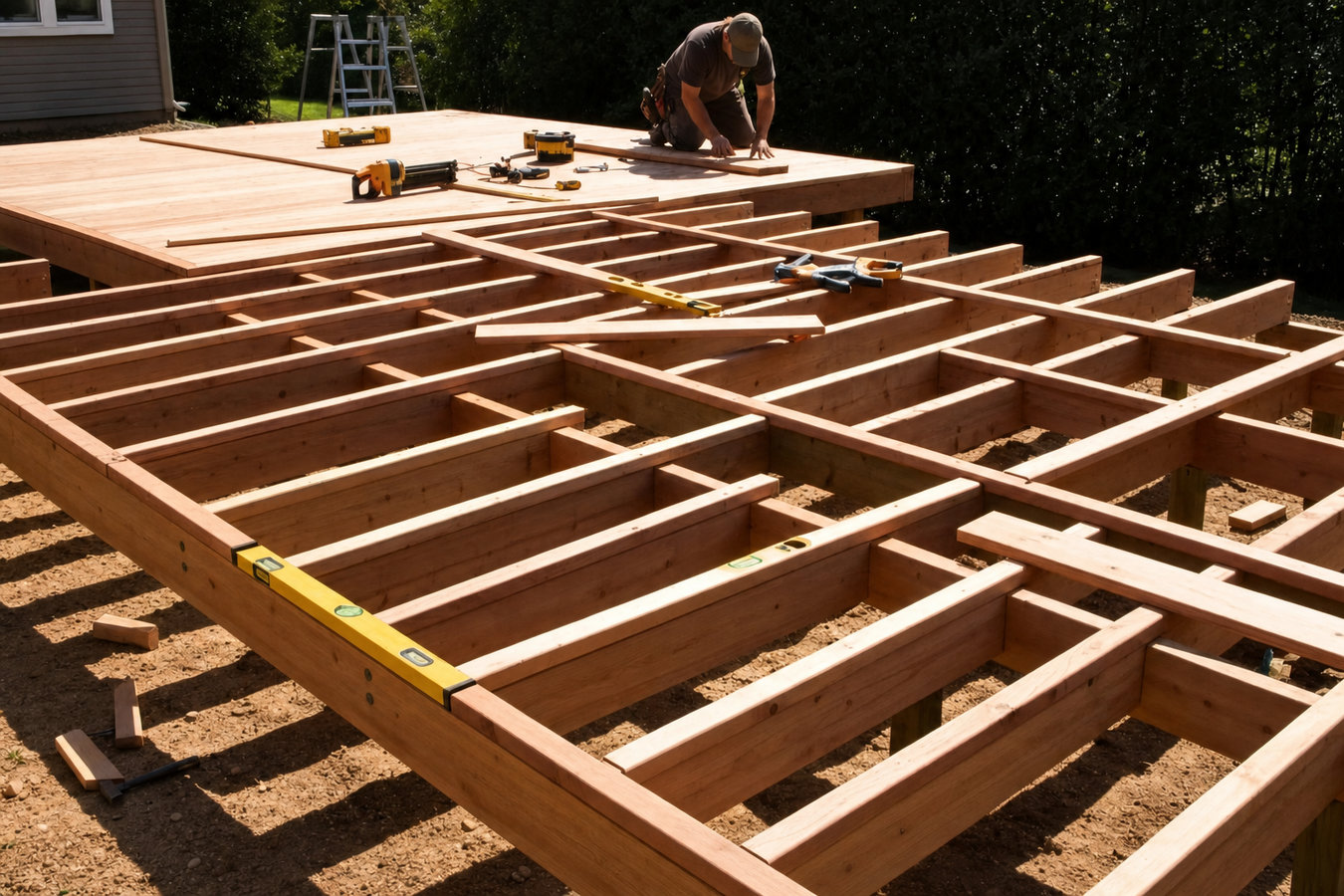
Cedar wood deck construction in West Melbourne means building a permitted, inspected outdoor living space using naturally rot-resistant lumber - most straightforward projects run one to two weeks of active construction once the Brevard County permit clears.
Cedar contains natural oils that fight off moisture and insects without chemical treatment. That matters here in West Melbourne, where summer humidity sits high and afternoon storms roll through nearly every day from June through September. A well-built cedar deck in this climate can last 15 to 20 years with basic annual care - and it looks genuinely warm and beautiful in a way that synthetic materials have not fully matched. It costs less upfront than composite decking, making it a popular choice for homeowners who want a real wood feel and are willing to do a little maintenance to keep it.
If you already have a deck that is aging and wondering whether you are dealing with a repair or a full replacement, our deck repair and replacement page walks through how to tell the difference. If you are comparing cedar to a lower-maintenance option, we also build pressure-treated wood decks and can help you weigh the trade-offs.
If your yard has no good place to sit, eat, or gather, you are missing the best months of living in West Melbourne. The mild winters and warm spring evenings here are genuinely enjoyable outdoors - from October through May, a deck turns your backyard into a room you actually use every day.
Walk your deck and pay attention to how boards feel underfoot. Soft or springy spots mean moisture has worked its way in and rot has begun - a common problem in Brevard County's humid climate. Dark staining, mushroom growth, or boards that flex when you step on them signal the structure may be past simple repair.
If you bought your home and are not sure whether the existing deck was ever permitted, find out before you sell or renovate. Unpermitted structures can complicate home sales and insurance claims in Florida. A new permitted deck replaces that uncertainty with a clean county record.
If your yard collects standing water after West Melbourne's summer storms, a raised deck can give you a dry, usable surface even when the ground is saturated. Properly built decks with drainage gaps let water pass through rather than pool, so you are not waiting days after every storm to use your outdoor space.
Every cedar project starts with an on-site visit to measure your yard, discuss how you want to use the space, and review board options. Western red cedar is the standard - it is the species most widely used for outdoor decking because its natural oils are the most effective at resisting moisture and insects without chemical additives. We also handle all Brevard County permitting, footing installation, and framing inspections before any surface boards go down. If your deck will need repair work before new boards are installed, we assess the existing structure honestly and tell you what is worth saving.
We build cedar decks in a range of configurations - ground-level platforms, elevated decks with stairs, decks with built-in benches or planters, and multi-level layouts for yards with slope. Every build is framed to Florida wind load requirements, and we walk you through the sealing and maintenance schedule at the end so you know exactly what the deck needs to stay looking sharp for years. For homeowners who want to compare cedar side by side with a lower-maintenance option, we also offer pressure-treated wood deck construction and can walk through the cost and care differences on-site.
Suits homeowners with flat yards who want a simple, affordable entry point to outdoor living without the need for a raised structure.
Best for homes where the back door sits above grade - gives you a landing that connects your indoor floor height to the yard below.
Ideal for homeowners who want built-in benches, planters, or storage integrated into the deck rather than added later with freestanding furniture.
Required for elevated decks by Brevard County code and a smart upgrade for any deck where safety and aesthetics both matter.
West Melbourne sits in Brevard County where summer humidity regularly tops 80 percent and afternoon thunderstorms roll through almost daily from June through September. That moisture cycle is harder on wood than almost any other climate in the country. Cedar's natural oils are genuinely earning their keep here - they slow moisture absorption and resist the insects that thrive in Florida's warm, wet soil. The county also requires decks to meet wind load standards shaped by hurricane season, which means every deck we build is framed and fastened to handle real storm conditions, and a county inspector confirms that before the project closes. Homeowners in Palm Bay face the same soil, humidity, and wind requirements - and we build to the same standards there.
Many West Melbourne neighborhoods, including subdivisions off Minton Road and in the Heritage Oaks corridor, are governed by HOAs with their own rules about deck size and materials. That is worth knowing before you commit to a design - your contractor needs to handle both county permitting and HOA approval, and the two processes run on separate timelines. Sandy soil conditions throughout Brevard County also require deeper footings than you would see in denser inland soils, which is one reason build experience in this specific area matters. Homeowners in Melbourne deal with the same soil and permit conditions and can count on the same local knowledge from us.
The Western Red Cedar Lumber Association provides grading standards for the species that a qualified contractor can reference when sourcing lumber - asking whether your contractor uses graded cedar is a reasonable quality check.
We ask a few basic questions about the deck size you have in mind, whether it will be attached to the house, and what you plan to use it for. This is not a pitch - it is the information we need to give you a realistic estimate. We reply within one business day and can typically schedule an on-site visit within a few days.
We visit your yard, take measurements, and look at the ground conditions and how your home is built. Within a few days of the visit you receive a written estimate that breaks down materials, labor, and permit fees - so you know what you are agreeing to before any work begins.
Once you move forward, we file for a Brevard County building permit. This typically takes one to three weeks. You do not need to manage the paperwork - we handle it. If your neighborhood has an HOA, we recommend getting their written approval during this window so there are no delays when the permit clears.
We dig footings, set the frame, install the cedar boards, and add any stairs, railings, or built-in features. A Brevard County inspector checks the finished deck against the approved permit. We walk you through the completed deck, explain the sealing schedule, and hand you the passed inspection paperwork for your records.
Free estimate, no obligation. We handle permits and inspections.
We file the permit application, coordinate the required inspections, and hand you the passed inspection paperwork when the job is done. You never have to navigate the permit office yourself, and your deck is on the county's record from day one - which protects you during a home sale or insurance claim.
Brevard County's proximity to the coast means decks here must be framed and fastened to meet specific wind load standards. Every deck we build meets those requirements, and the county inspection process confirms it. You head into hurricane season with a structure built for it, not one that was cobbled together without regard for Florida's code.
West Melbourne's sandy soil requires deeper footings than denser inland soil. Our crews know that and size footings correctly from the start - a detail that determines whether your deck stays level and solid for 15 years or starts to shift within a few seasons. The American Wood Council sets the framing standards we follow for wood outdoor structures.
Before any work starts, you get a written estimate that itemizes materials, labor, and permit fees. No verbal quotes that change at invoicing. If we find anything unexpected during construction - which does happen when old structures are involved - we tell you before we proceed, not after.
Putting all of this together means you get a deck that is documented, structurally sound, and built for the specific conditions of West Melbourne - not a generic build that might have been done anywhere. Call us or request a free estimate online to get started. Reach out here and we will be back to you within one business day.
More questions? The North American Deck and Railing Association publishes homeowner guides on deck construction and safety standards.
If your existing wood deck has soft boards, loose railings, or structural concerns, we assess what can be saved and what needs to go.
Learn MoreA pressure-treated wood deck costs less upfront than cedar and holds up well in Florida when properly maintained and sealed.
Learn MorePermit slots in Brevard County fill up - reach out now to lock in your build date before the season books out.